Welcome to the CHEOPS website!
News
CHEOPS detects a new planetary "disorder"
March 9th, 2026
First the rocky planets, very close to their star, then the gas giants: this is the order in whic...
Cheops discovers late bloomer from another era
February 16th, 2026
Scientists used the European Space Agency's Cheops satellite to discover that the planetary syste...
Clingy planets can trigger own doom, suspect Cheops and TESS
July 2nd, 2025
Astronomers using the European Space Agency’s Cheops mission have caught a clingy exoplanet that ...
CHEOPS' location
Live position of the CHEOPS satellite


CHEOPS - Unveiling the structure of planetary systems and the composition of exoplanets
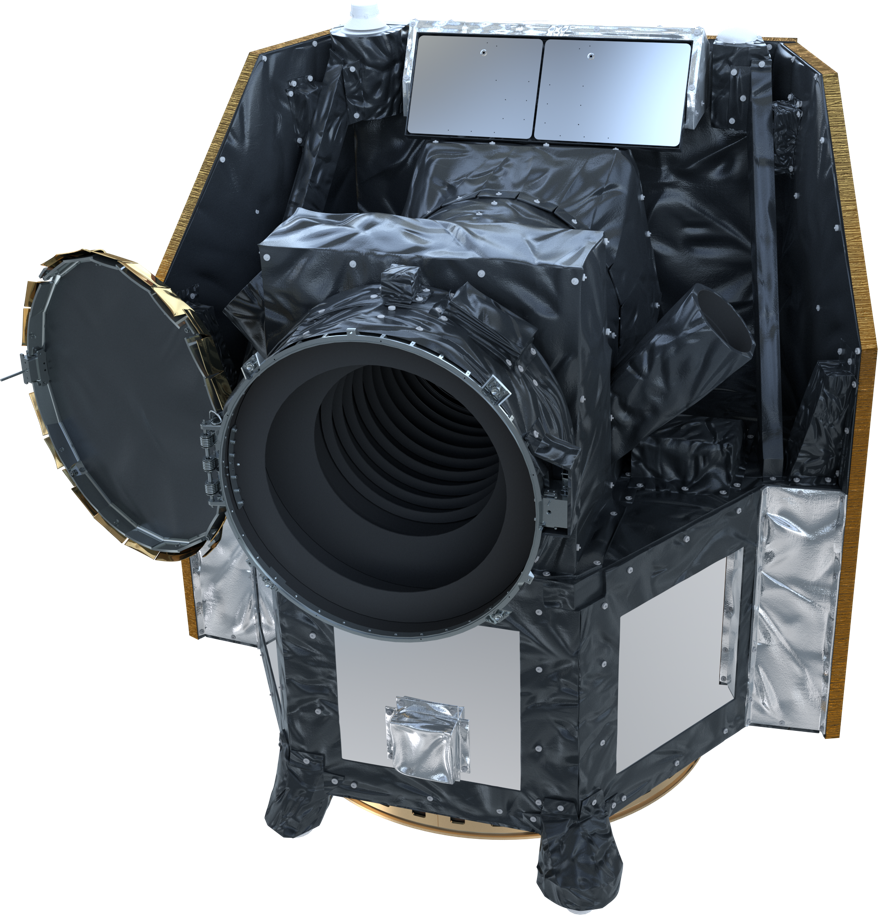
The CHEOPS mission (CHaracterizing ExOPlanet Satellite) is dedicated to characterizing exoplanet transits. CHEOPS measures the changes in brightness of a star when a planet passes in front of it. From this measurement, the size of the planet can be derived and, with existing data, its density can be determined. This provides important information about these planets – for example, whether they are mostly rocky, consist of gases, or have deep oceans. This, in turn, is an important step in determining whether a planet has conditions conducive to life. CHEOPS was launched into space on Wednesday, December 18, 2019 on board a Soyuz Fregat rocket from the European spaceport in Kourou, French Guiana. Since then, CHEOPS has been orbiting the Earth at an altitude of 700 kilometers along the day-night boundary in approximately 100 minutes.
CHEOPS-Children’s Drawings Campaign
Below are 3 of the 2748 drawings that orbit the earth with the CHEOPS satellite.
CHEOPS mission extended (En - De/Fr subtitles)
Picture of the Month
CHEOPS reveals a rugby ball-shaped exoplanet
January 12th, 2022
ESA’s exoplanet mission Cheops has revealed that an exoplanet orbiting its host star within a day...